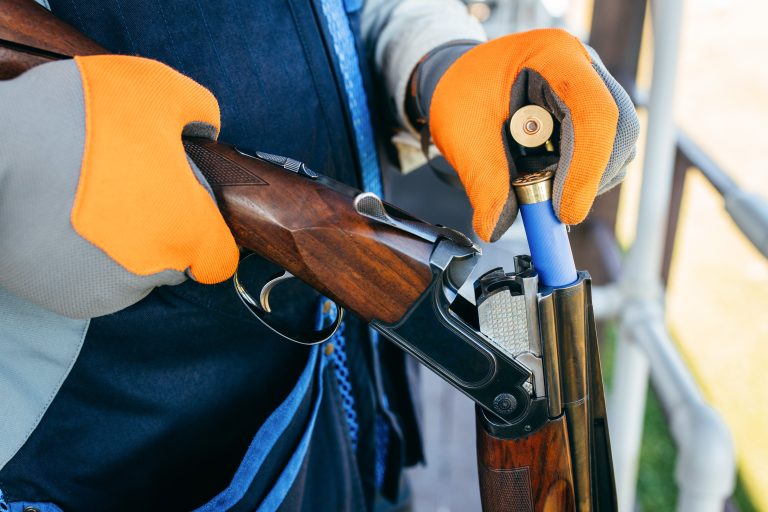
Half the squad are pulling on a pair of snug, technical skins before stepping into the cage while the other half’s blowing warmth into bare knuckles, adamant that nothing should ever come between their skin and the trigger.
It’s one of those subtle equipment choices that sparks surprisingly strong opinions mostly because the margin between dusting a fast crosser and dropping a point behind it often comes down to the finest tactile feedback.
The LOAD+FIRE squad is split in 3 camps on this one. Some of us wouldn’t dream of shooting bare-handed once the temperature drops, swearing by the consistent traction and warmth a proper shooting glove provides. Less distractions right?
Others simply keep their bare hands warm via pockets stuffed with pocket warmers going stand to stand.
And the final group prefer to keep gloves tucked into a pocket exclusively for when they’re not shooting, slipping them off the moment it’s time to step up and call pull to keep that full hand-to-gun contact consistent, whatever the weather.
All approaches have merit and both come with very real mechanical trade-offs that directly affect how you mount, swing and break the target.
The case for bare hands
For the purists, shooting is a game of micro-adjustments and raw sensory input. When a bare finger rests against the trigger, you get an unfiltered read on pressure and the exact breaking point. The leading hand feels every ridge of the forend wood, giving the brain immediate spatial awareness of where the barrels are pointing without a thought.
Introducing a layer of leather or synthetic fabric inevitably mutes the delicate conversation between hands and gun. Even the thinnest engineered gloves can slightly alter how the gun sits or create a tiny, subconscious hesitation on the trigger pull risking more of a grab than a squeeze.
For shooters who rely heavily on instinct and subtle hand-eye coordination, losing that direct skin-to-wood contact feels like trying to play a piano while wearing mittens.
... and wearing gloves?
On the other side of the clubhouse table, the pro-glove camp makes a compelling argument rooted in consistency and friction.
Cold fingers are slow fingers. Once the chill sets into joints, fine motor skills degrade rapidly – turning a smooth, deliberate trigger press into a snatchy slap. A dedicated, second-skin shooting glove traps enough heat to keep your hands supple through a hundred-bird layout without adding bulk.
Beyond warmth, there’s the question of grip.
Rain and morning dew can turn slick oil-finished walnut into a liability, forcing you to squeeze the forend tighter just to keep your grip. That extra tension in the hands immediately travels up the forearms and locks the shoulders, killing fluidity on what would otherwise be a sweeping swing through shot.
A glove engineered with targeted grip zones lets you hold the gun with a relaxed, neutral pressure, keeping the upper body loose regardless of the weather.
The hybrid middle ground
For those not ready to commit to shooting gloved up, but the thought and feel of sub-zero fingers needs to go, the between-stand routine offers a remarkably effective compromise, no surprise.
Keeping a heavier pair of thermal gloves or mittens on while waiting in the queue preserves core hand temperature and keeps blood flowing to the fingertips. When your turn comes around, you can strip them off, put them in your vest’s rear pocket and step into the stand or on to the peg with warm, responsive hands – enjoying full bare-skinned control.
It requires a bit of pocket management and a disciplined pre-shot routine but for many shooters, it delivers the best of both worlds without forcing them to ‘learn’ a winter style of shooting vs. summer.
Pocket warmers do pretty much the same job, it’s just one more thing to remember to charge and you know they’ll only ever run out of battery mid-round.
Finding what works
There’s no universal rule book here and what feels like an essential piece of kit to one shooter will feel like an unnecessary distraction to another.
If you’re considering making the switch to shooting in gloves, the worst time to test them is during a registered competition. Take a pair to a practice session, pay close attention to how the leading hand indexes on the forend and notice whether trigger feel and timing shifts. During practice you can make adjustments and commit them to memory.
Ultimately, the right choice is whichever setup lets you forget about your hands temperature and keeps your fingers completely functioning so you can put every ounce of focus onto the clay.